
Illustrative generated image
Software studio · Ongar, Essex
Built to keep moving.
Muscle Atlas designs, builds, publishes and looks after mobile apps and websites. We work at a steady, visible pace: plan a little, build a little, show you the result, then decide the next move together.
- Mobile appsiOS & Android
- Websitessites & web apps
- Interface designresearch to systems
- Store publishinglistings & review
- Aftercareupdates & fixes
The training week
What a working week looks like
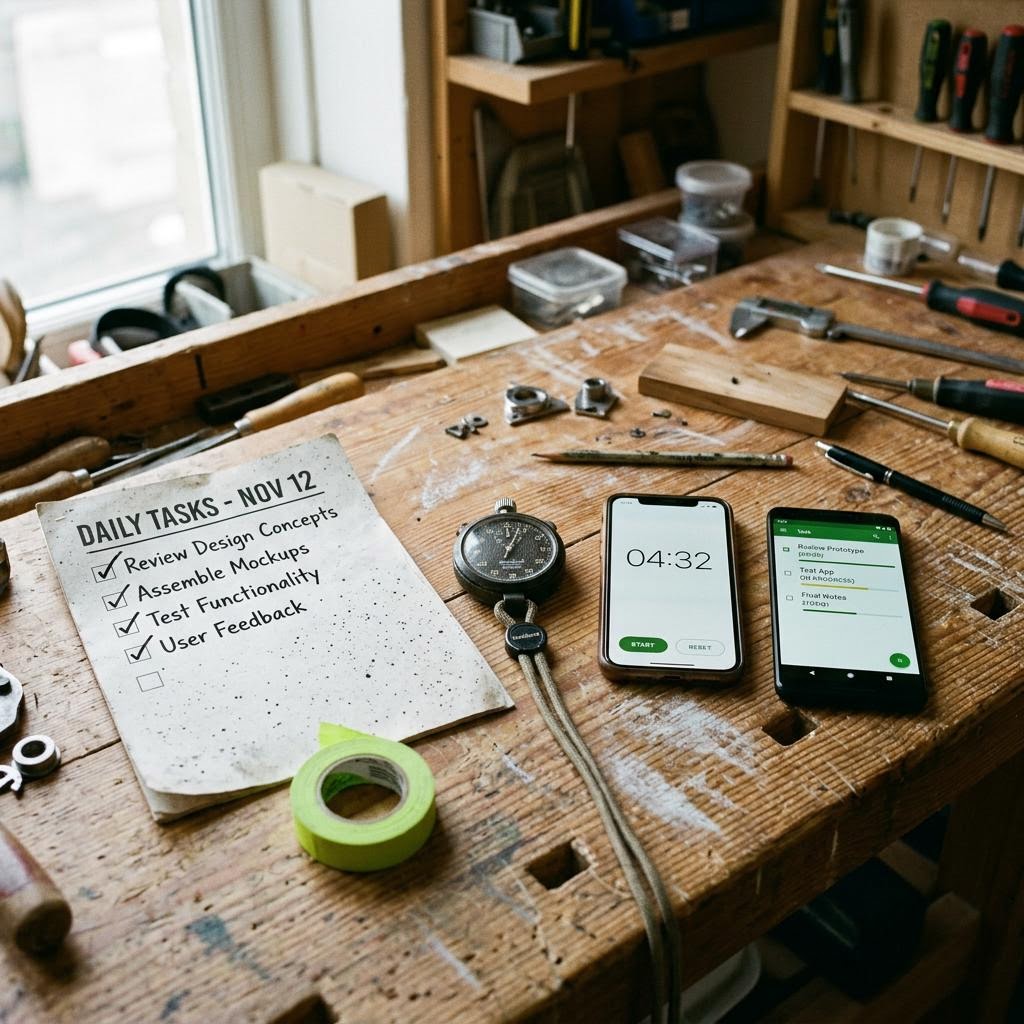
We do not believe in launch-night marathons. Good software comes from a repeatable pace with a visible result at the end of every cycle. Here is the shape of a typical build week, so you know what we are doing and when you will hear from us.
In the studio
What you see
Monday
Plan the week: agree which small pieces will be finished by Friday.
A short written plan, with anything waiting on you flagged.
Tuesday
Design and build, paired where a decision is tricky.
Nothing to chase. Questions arrive in one daily message.
Wednesday
Mid-week check: is the plan still realistic?
An early warning if something will slip, with options.
Thursday
Testing on real devices, accessibility checks, code review.
A test build or staging link to try ahead of the demo.
Friday
Demo and written summary: done, learned, next.
A working result you can click, and a decision to make.
Some clients prefer fortnightly demos, or a lighter retainer. The rhythm adapts; the visibility does not. How the studio works
What we do
Five lanes, one team
Every project runs through the same lanes. Some clients need all five; many arrive needing one. Each lane has its own page with deliverables and the questions we ask first.
- MobileiOS & Android
Apps that open quickly, survive a weak signal and respect the conventions people already know. Cross-platform where one codebase saves money without costing your users; native Swift and Kotlin where hardware or performance demand it. You receive source code in your own repository, signed test builds and a release guide.
Mobile development - Websites & web apps
From a focused company site to a logged-in product with its own data and admin. Accessible markup, a page-weight budget, forms that keep what you typed, and hosting set up in your accounts with written instructions.
Web development - UI/UXresearch & design
Interviews, journey maps, wireframes and clickable prototypes tested with real people before a developer spends a day on them. Ends with a component library showing every state, so the build matches the design.
Interface design - Launchpublishing help
Developer accounts in your name, store listings, privacy declarations, review submissions, domains and the dull-but-vital checks that stop a launch day slipping.
Publishing assistance - Supportafter release
Operating-system updates, dependency upkeep, monitoring and a clear route for reporting problems once your product is in people's hands.
Support
Warm-up tool
Not sure where to start?
Answer three questions and we will suggest the shape of a first engagement. It is a starting point for a conversation, not a quote, and nothing you choose is sent anywhere.
If you accept optional storage, your answers stay on this device so you can come back to them. Reject it and they disappear when you leave.
Pacing tool
Work back from a launch date
Launches slip when the last fortnight is asked to hold six weeks of work. Pick a target date and the surfaces you are releasing on, and this planner lays out the checkpoints we would aim for, working backwards. It runs in your browser and saves nothing.
Store review times vary and are outside anyone's control, so the plan leaves room before launch day.
Kit list
What you take away
Whether we work together for a month or for years, you should be able to carry on without us. Everything is created in your organisation's name from the first day.
Source code
In a repository you own, with a readme a new developer can follow.
Accounts
Developer, hosting and domain accounts registered to you.
Designs
Prototype and component library with every state.
Decision log
What we chose, what we rejected and why.
Test record
Devices checked, accessibility results and known gaps.
Release guide
How to build, publish and roll back, step by step.
After the finish line
Choose a support rhythm
Software slows down if nobody looks after it. Apple and Google release new systems every year, libraries publish security fixes and browsers change. Pick the level of care that suits the product.
| Arrangement | What it covers | Suits |
|---|---|---|
| Maintain | Monthly dependency and security updates, yearly operating-system compatibility work, fixes for faults we introduced. | Stable products that mainly need to keep working. |
| Maintain and improve | Everything above, plus a regular block of improvement time and a monthly planning call. | Products still learning from their users. |
| On request | No standing arrangement. Each job is quoted and scheduled by availability. | Low-risk sites and tools that rarely change. |
Something broken now? Send a support request with what you expected, what happened and how to reproduce it.
Reading on the bench
Three useful references
GOV.UK Service Manual
Plain guidance on researching, designing and running digital services. Useful well beyond government.
gov.ukApp Store Review Guidelines
What Apple checks before an app is approved. Worth reading before design starts.
developer.apple.comWCAG 2.2 overview
The accessibility standard we design and test against, explained by the W3C.
w3.orgQuestions
Before the warm-up
Anything else, ask. We reply Monday to Friday, 09:00–18:00 UK time.
Do you give fixed prices?
For well-defined work, yes. Where too much is unknown, we suggest a short discovery first, then price the build against an agreed scope.
How often will we hear from you?
At least once a week: a written summary and a demo at the end of each cycle, plus one daily message if we have questions.
Native or cross-platform?
It depends on hardware needs, performance and maintenance budget. We explain the trade-off for your product before committing.
Can you take over an existing app?
Yes. We start with a review of the code, dependencies, accounts and release process, and tell you plainly what we find.
Can we meet you?
Our Ongar address is a correspondence address. We work mainly remotely and arrange meetings in advance.